Personal computing guide
Getting to know Martin Wood
A Rails and AI engineer in Cardiff. This short guide covers what he does, what he has built, and how to get in touch.

Quick start
- Role
- Ruby on Rails and AI engineer
- Now
- Builds and runs the technology at Photosymbols: a client since 2012, full-time since 2022
- Experience
- Programming for a living since 1997
- Education
- BSc (Hons) Computer Science, Cardiff University
- Contact
- martin@martinwood.org
1 What he does
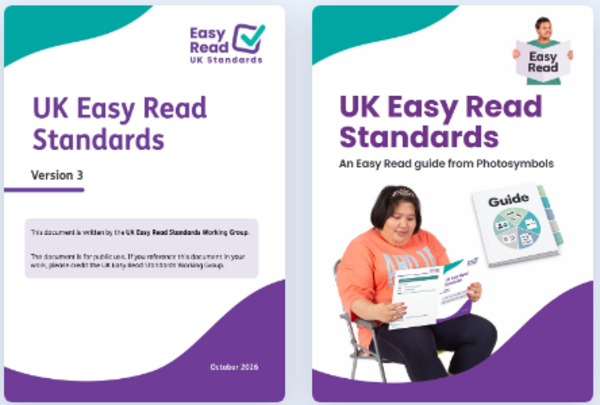
He builds and runs the technology behind Photosymbols, first as a freelancer from 2012 and full-time since 2022. Photosymbols makes information easier to understand with Easy Read and photos of real people. Since 2024 it has been an AI product: a document goes in, an Easy Read version comes out.
Since 1997: Perl and C++ for Companies House from 1997, then Java as a project lead and team lead on public-sector systems, then his own software company from 2007 and freelance Ruby on Rails from 2010. The highlights are in chapter 3.
2 Recently built

- An AI gateway. One way in to Anthropic, OpenAI and Google models. It records the cost of every call and removes personal data before any text leaves.
- wt. Runs several AI coding agents on one Rails app at once, each with its own copy of the code, database and server.
3 Version history
Earlier releases, newest first.
- 2022 to now: Photosymbols, full-time. Builds and runs all its technology, and since 2024 has turned it into an AI product. See chapters 1 and 2.
- 2010–2022: freelance Ruby on Rails. For RumRatings, cut slow pages from 15–20 seconds to under a second and turned the site into a white-label product, used by Nescafé for coffeeratings.co. Training platforms for YTKO. And Photosymbols, from 2012, which became a full-time job in 2022.
- 2007–2010: his own software company. Founded, built and marketed Datafeed Studio, which turned retailers' product feeds into online shops, plus the Prices UK price comparison app for iPhone.
- 2005–2007: Companies House, CHIPS. Team lead for up to ten developers on a £40m project replacing a mainframe with Java. His system sent up to 40,000 letters a night.
- 2004–2005: Cardiff University. Lead developer on the content management system behind the university's public website, delivered on time for the new academic year, and CourseFinder for prospective students.
- 2001–2004: European Business Register. Won the contract with his own specification, then led the team that built how company information is exchanged across the EU.
- 1997–2001: Companies House. Lead developer of WebCHeck, free public information on over two million companies, and part of the Companies House Direct team that won a Computer Weekly Award for Excellence in 2000.
4 Unpacking
Martin got a VIC-20 at eight, and its manual made programming feel like something anyone could try. He typed in listings from the backs of magazines, then moved to a Spectrum +2 and an Amiga (C, 68k assembler and AMOS). The Spectrum's real job was a modem: he has been online since 1987, on Micronet/Prestel at 1200/75 baud.
10 PRINT "MARTIN WAS HERE "; 20 GOTO 10 RUN MARTIN WAS HERE, repeated until someone stops itBREAK IN 10 READY.
Press RUN/STOP before the shop assistant comes over.
5 Care and maintenance
- Keep him in a terminal.
- Feed him Kanban boards. Without one, nothing happens.
- He runs a shutdown checklist every night. Do not interrupt it.
SPECIFICATIONS
| First computer | VIC-20, age 8 |
| Bytes free | 3583 |
| Editor | Vim, 25+ years |
| Bookmarks saved | 56,000 |
| Bookmarks read | some |
| Online since | 1987 |
| Modem speed | 1200/75 baud |
| Years shipping | 29 |
6 Troubleshooting
If you want to talk about Rails, AI or making things easier to understand, email martin@martinwood.org.
Appendix A: more about me. Code on GitHub. Appendix B: writing.